Protecting Your Spine
The structural integrity of your seating arrangement directly influences the structural integrity of your body. When we evaluate office chairs, the first and most critical component is how it interacts with the lower back.
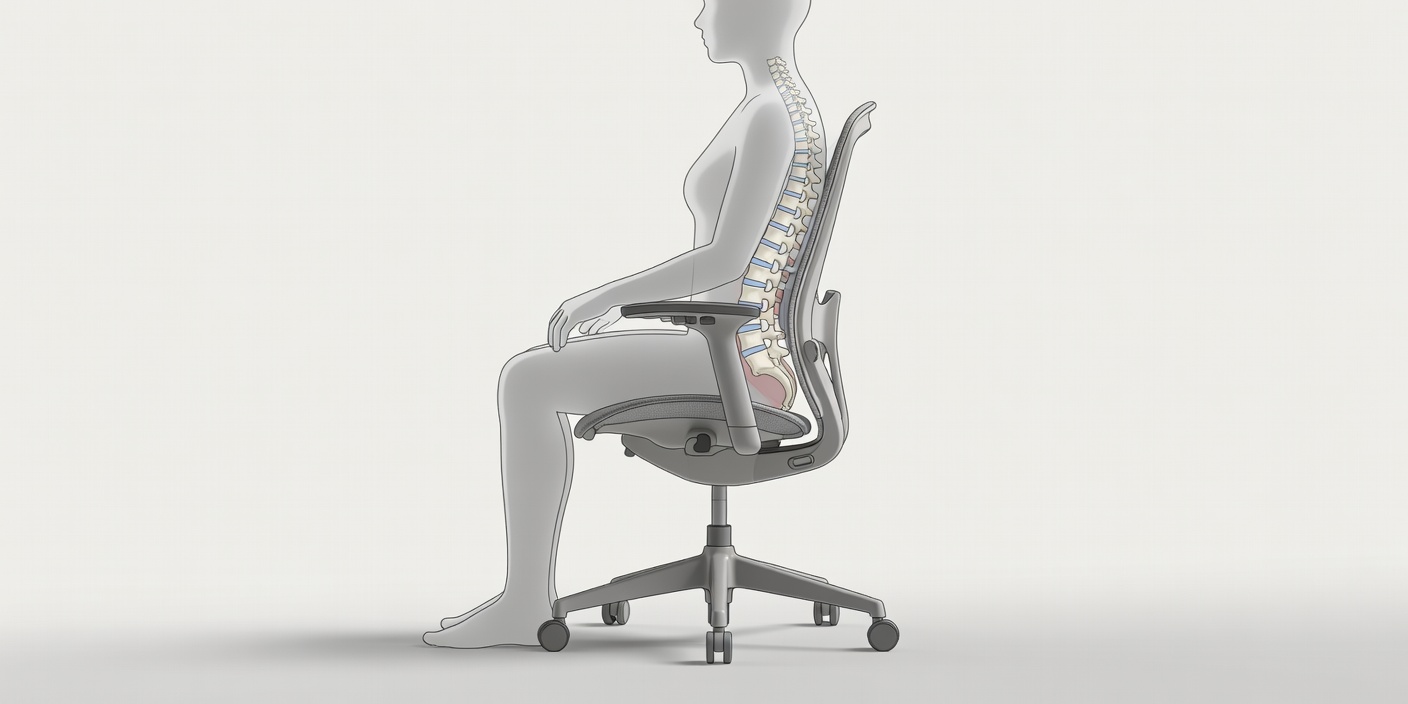
The Science of Sitting
Sitting is inherently a static activity, which is contrary to the dynamic nature of the human body. Without proper intervention, the pelvis rotates backward, flattening the natural lordotic curve of the lumbar spine. This shifts the load from the muscles to the passive structures—ligaments and discs—leading to long-term discomfort and potential injury.
Active vs. Passive Support
Passive support relies on fixed curves built into the chair's backrest. While better than nothing, it assumes an 'average' body shape. Active support involves adjustable mechanisms—either tension-based mesh or physical pads that can be moved vertically and adjusted for depth.
When selecting a chair, prioritize models that allow you to fine-tune where the pressure is applied. The apex of the curve should rest comfortably in the deepest part of your lower back, gently encouraging the pelvis to remain upright.
Quick Posture Check
- Are your feet flat on the floor?
- Are your knees at or slightly below hip level?
- Is your lower back firmly against the chair's support?