Synchronous Tilt
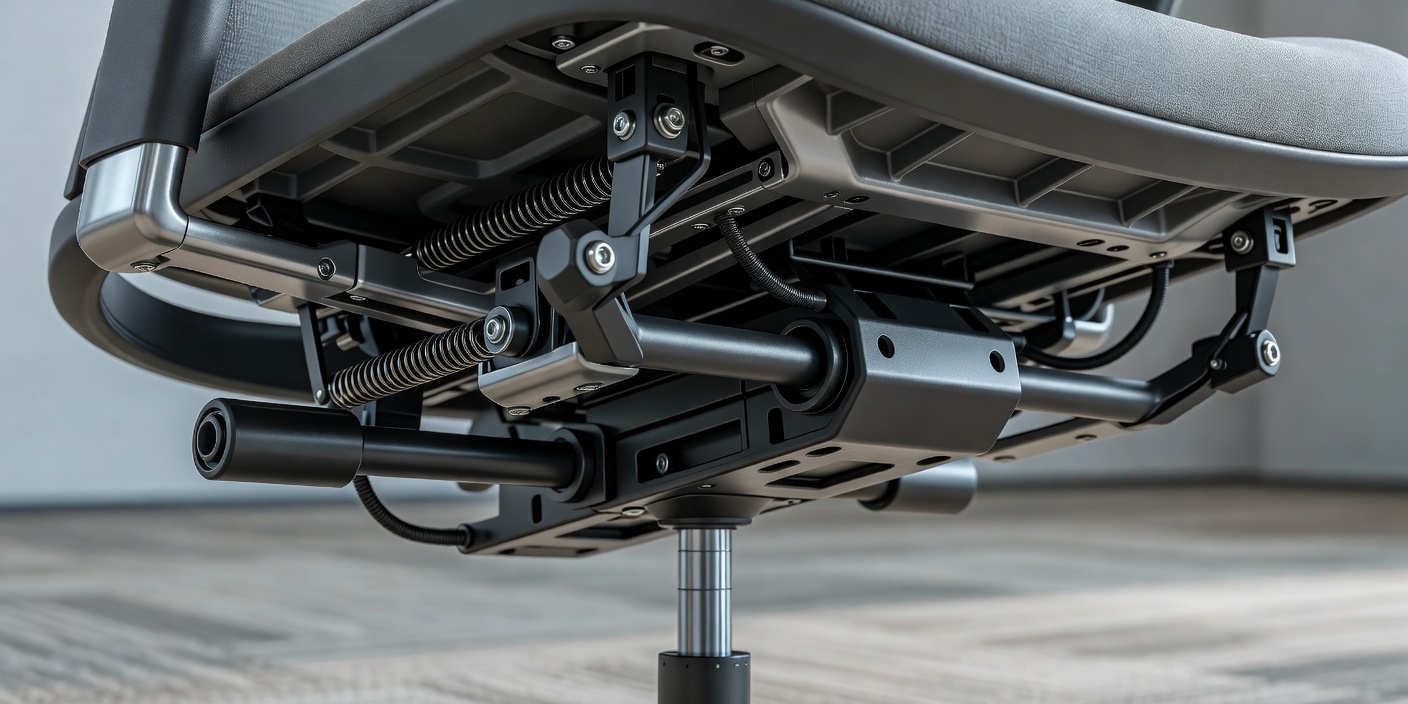
Beneath the seat pan of every high-end office chair lies a complex array of springs, gears, and tensioners. This is the heart of dynamic seating: the mechanism.
Why Basic Tilt Fails
On standard, low-cost chairs, the seat and backrest are often locked at a 90-degree angle (center-tilt). When you lean back, the entire chair rocks backward. This lifts your feet off the floor, places pressure under your thighs (cutting off circulation), and forces you to stare at the ceiling rather than your monitor.
The Synchronous Solution
A synchronous tilt mechanism solves this geometry problem. It is designed so that the backrest reclines at a faster rate than the seat pan—typically a 2:1 or 2.5:1 ratio.
When you recline in a chair with synchronous tilt, your torso opens up, transferring weight to the backrest, while your feet remain flat on the ground. The front edge of the seat stays relatively level, preventing under-thigh pressure.
Key Mechanism Features
- Tilt Tension Control: Adjusts the resistance of the recline based on your body weight.
- Tilt Lock / Limiter: Allows you to lock the chair upright or limit how far back it can recline.
- Seat Depth Adjustment: Slides the seat pan forward or backward to accommodate different leg lengths.